Norway rat control services in Greensboro, NC
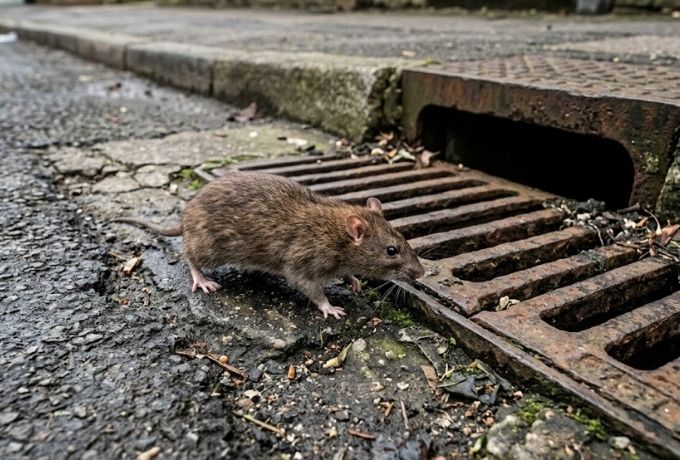
Norway rats are ground-dwellers — they burrow, they follow storm drains, they colonize crawl spaces and sewer-adjacent yards. In Greensboro's older neighborhoods, the combination of aging crawl-space foundations and active storm-drain infrastructure creates ideal Norway rat conditions. Our crawl-space-first treatment programs address the population below the floor, seal the foundation perimeter, and eliminate the yard burrows driving the pressure.
Four pressure zones — each with different treatment implications
Restaurant corridor — Downtown & South Elm
The highest Norway rat density in Greensboro runs along the restaurant alley systems behind Elm Street and Davie Street. Open dumpsters, organic waste, and storm-drain adjacency sustain large colonies that expand into adjacent residential blocks when alley populations are disturbed or when seasonal food sources shift. Properties within two blocks of the restaurant corridor have significantly elevated Norway rat pressure.
Storm-drain network — Kirkwood, McAdoo Heights, Fairview Homes
Greensboro's storm-drain infrastructure creates a protected underground travel network for Norway rats. Properties adjacent to storm-drain outfalls in NE Greensboro — particularly in Kirkwood, McAdoo Heights, and Fairview Homes — see Norway rats using the drain network to move between harborage sites. Pressure is highest immediately after heavy rain events that flood lower drain sections and push rats toward surface structures.
Crawl-space neighborhoods — Aycock, College Hill, Westerwood, Glenwood
Pre-WWII and postwar crawl-space housing in these neighborhoods provides ideal Norway rat harborage. Deteriorating foundation vent screens, sill-plate gaps, and pipe penetrations give entry. Once in the crawl space, Norway rats breed in the sub-floor insulation, damage plumbing and wiring, and — in established infestations — work upward into wall cavities. These are the most complex Norway rat jobs we handle.
Rural edge — Pleasant Garden, Grandover, agricultural adjacency
Properties at the suburban-agricultural edge see Norway rat pressure that tracks field cycles. When fields are harvested in fall, Norway rats that have been living in ground cover move toward structures — outbuildings, garages, crawl spaces. This is a different pressure pattern from the urban-core zones and typically produces shorter, more seasonal infestations if entry points are sealed promptly.
Understanding what you're dealing with
Norway rats (Rattus norvegicus) are the heaviest rat species in North Carolina — adults reach 10–12 inches body length with a heavy, blunt build. They're ground-dwellers with poor climbing ability relative to roof rats, which means they access structures from below rather than above. This behavioral difference is what makes their treatment program fundamentally different from roof-rat work.
Key Norway rat characteristics relevant to treatment:
- Neophobic: Norway rats are extremely cautious about new objects in their territory, including fresh traps. Successful snap-trap programs in crawl spaces require pre-baiting — placing unset traps with bait for several days before the traps are activated. Skipping this step produces poor trap-strike rates and prolongs the program.
- Burrow-based: The primary colony lives in ground burrows, not inside the structure. Crawl-space activity is an extension of the burrow network. Treating only the crawl space without addressing yard burrows leaves the source population intact.
- Water-dependent: Norway rats need regular water access. Greensboro properties with standing water, leaking crawl-space pipes, condensate drain discharge onto the ground, or storm-drain adjacency sustain larger populations. Addressing moisture is part of the harborage-reduction assessment we provide.
- Social and territorial: Norway rats live in social colonies of 10–100 individuals with a defined territory. Removing individuals without addressing the territory perimeter allows neighboring colony members to backfill within 1–2 weeks.
Norway rat control — crawl-space to perimeter
Crawl-space & yard inspection
Walk the crawl space to map droppings, runways, nesting sites, and entry points. Exterior perimeter inspection for active burrows, storm-drain adjacency, and harborage conditions. Written assessment of all entry points and contributing factors.
Pre-baited snap-trap network
Place unset snap traps with bait in crawl space at confirmed travel paths. Let sit for 3–5 days to overcome neophobia before activating. Exterior tamper-resistant bait stations placed at burrows and perimeter harborage sites simultaneously.
Foundation exclusion sealing
After population knockdown is confirmed — no new trap strikes for 5+ days — seal all foundation entry points. Galvanized hardware cloth at vent screens, copper mesh at pipe penetrations, steel plate or rigid foam-plus-mesh at sill-plate gaps. Burrows treated with burrow fumigant or collapsed and compacted.
Follow-up & harborage report
Return 14–21 days after sealing to verify no new crawl-space activity. Exterior bait stations checked and refreshed. Written harborage-reduction report — specific recommendations for wood-pile relocation, compost management, moisture sources, and vegetation clearance.
Norway rats in your Greensboro crawl space? Call (844) 635-0403
Free crawl-space and perimeter inspection across Guilford County. We identify every entry point, map the burrow network, and give you a written quote before any work starts.
Call (844) 635-0403Norway rat control cost in Greensboro
Standard crawl-space program
Crawl-space trap network, exterior bait stations, foundation exclusion sealing, and follow-up. Standard residential crawl-space job.
Extended perimeter program
Active yard burrow network, storm-drain adjacency, or restaurant-corridor proximity requiring extended exterior bait-station program and burrow treatment.
Large foundation / complex access
Large crawl-space footprint with multiple vent penetrations, difficult access, or significant sill-plate exclusion sealing scope.
Crawl-space cleanup and moisture-barrier assessment quoted separately if needed. Free inspection, written quote before work starts. All programs include crawl-space follow-up and exterior bait station check.
Norway rat control in Greensboro — FAQ
How do Norway rats get into Greensboro crawl spaces?
Norway rats enter crawl spaces through several common pathways: deteriorated vent screens, foundation block vents with mortar gaps, utility-line penetrations sealed only with foam (foam alone isn't rodent-proof — they chew through it), gaps at the sill plate where wood framing meets concrete foundation, and in some cases through broken or misaligned sewer cleanout caps. The access points tend to be on the north and east faces of Greensboro foundations, which face away from prevailing wind and accumulate more moisture that accelerates deterioration.
What do Norway rat burrows look like in a Greensboro yard?
Norway rat burrows are 2–4 inch diameter holes in soil, typically with a small mound of fresh dirt at the opening and a secondary escape hole nearby with no dirt mound. They concentrate near harborage — under sheds, wood piles, decks, and near foundation walls. Along fences adjacent to restaurant alleys or storm-drain outfalls, you may see multiple burrows in a linear pattern. Active burrows have clean, smooth-edged openings; inactive ones accumulate debris and spider webs.
Does bait or trapping work better for Norway rats in crawl spaces?
For crawl-space Norway rat programs, we use a combination. Snap traps in the crawl space provide fast knockdown and allow carcass removal. Tamper-resistant bait stations on the exterior perimeter target the broader colony that extends into yard burrows. Bait alone in crawl spaces risks rodents dying inside the structure and producing odor — that's why we prefer snap traps for the interior and bait stations for the perimeter.
Why do Norway rats keep coming back to my Greensboro property every year?
Annual recurrence has two causes. First, unsealed entry points: Norway rats from the storm-drain network or neighboring properties can re-enter through any gap not sealed with rodent-grade materials — foam alone fails. Second, harborage on the property: wood piles, dense shrubbery against the foundation, bird feeders, and unsecured trash sustain resident populations between treatment cycles. We address both with exclusion sealing and a written harborage-reduction assessment.
How much does Norway rat control cost in Greensboro?
A standard Norway rat crawl-space program runs $700–$1,600 for most Greensboro homes. Properties with extensive burrow networks, sewer-adjacent infrastructure, or large crawl spaces with multiple vent penetrations fall in the $1,200–$2,000 range. Free inspection, written quote before work starts.