Mice control services in Greensboro, NC
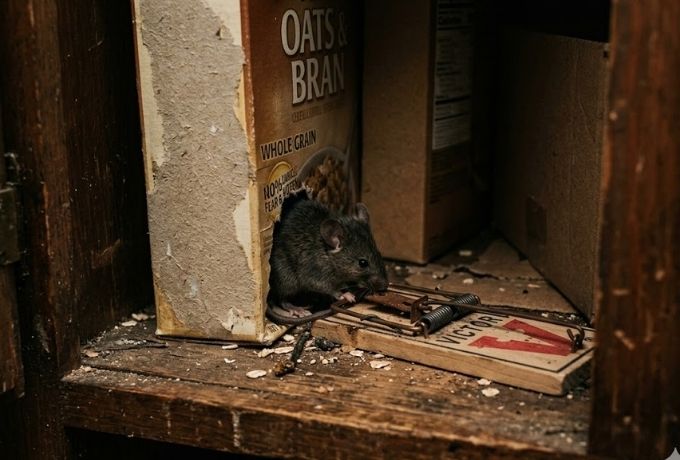
House mice can fit through a gap the size of a dime — which means that 1940s bungalow in Lindley Park, the crawl-space ranch in Glenwood, and the remodeled colonial in Hamilton Lakes all have more entry points than they look like. Greensboro Rodent Control finds every one of them, eliminates the active population, and seals with rodent-grade materials so the next season's mice don't follow the same path in.
What makes Greensboro's mice problem persistent
House mice thrive in Greensboro's older housing stock because the city's pre-WWII and postwar homes were built with construction tolerances that modern rodent exclusion standards would flag immediately. Sill plates settle. Foundation block develops hairline gaps. Pipe penetrations from mid-century plumbing upgrades often weren't sealed. HVAC retrofits create new wall-cavity penetrations. Every one of these is a potential entry point for a house mouse.
The UNCG corridor — Westerwood, College Hill, Lindley Park — has the highest mouse-call density in Greensboro. The combination of older housing stock, high rental turnover that interrupts maintenance, and student-adjacent trash patterns creates ideal conditions. But mice are a Guilford County-wide issue, not just a student-neighborhood problem. Newer subdivisions like Adams Farm and Grandover see mice seasonally as agricultural fields at the suburban edge push field mice toward warmer structures in the fall.
Common entry pointsWhere mice enter Greensboro homes
Pipe penetrations
Gaps around water supply and drain lines under kitchen and bathroom sinks — often 1/2 inch or larger after decades of movement.
Crawl-space vents
Corroded or bent vent screens on crawl-space foundation vents. Standard hardware-cloth gauge is too light; mice chew through in weeks.
Sill plate gaps
The joint where wood framing meets concrete foundation. Settlement creates gaps, especially on corners and at additions where framing was spliced.
Door sweeps
Worn or missing door sweeps on garage service doors, rear entry doors, and basement entries. Mice don't need much — a 1/4-inch gap is sufficient.
Utility line entries
Where electrical conduit, cable, gas line, or HVAC refrigerant lines penetrate the foundation or wall. Often foam-sealed initially; foam degrades and mice chew through it.
HVAC penetrations
Where ductwork passes through interior walls or floor systems. Modern HVAC retrofits in older homes routinely leave small gaps at duct transitions.
How mice control works at your Greensboro property
Inspection & mapping
Walk the full interior, crawl space, garage, and exterior perimeter. We look for droppings, grease marks, gnaw damage, nesting material, and every potential entry point — not just the obvious ones.
Snap-trap network
High-density snap-trap placement along confirmed travel routes — behind appliances, inside cabinets, in crawl-space junction points. Trap placement follows the mouse's behavior, not the homeowner's intuition about where to look.
Perimeter sealing
Every identified entry point sealed with rodent-grade materials — copper mesh, hardware cloth, galvanized flashing, or expandable foam with embedded mesh depending on the gap type. We document every sealed point.
Follow-up & clearance
Return visit 10–14 days after initial treatment to check traps, clear any dead mice, and confirm no new entry. If activity has stopped and all entry points are sealed, the job is closed. If not, we continue until it is.
Confirming you have mice and not rats
Before any treatment, we confirm the species — because mice and rats need different approaches and different exclusion materials. Here are the field indicators we use at inspection:
- Droppings size: Mouse droppings are 1/8–1/4 inch, pointed at both ends, roughly rice-grain shaped. Rat droppings are 3/4 inch (Norway) or 1/2 inch (roof rat), with blunt or pointed ends depending on species.
- Gnaw damage: Mice gnaw small, clean holes — 1–1.5 inch diameter with smooth edges. Rats gnaw larger, rougher openings.
- Footprints: Mouse footprints are tiny — front feet 3/8 inch, rear feet 5/8 inch. Rat prints are noticeably larger.
- Location of activity: Mice concentrate in kitchens, pantries, and wall cavities near food sources. Norway rats concentrate in crawl spaces and ground-level areas. Roof rats concentrate in attics and upper wall cavities.
- Nesting material: Mice build tight, round nests from shredded paper, insulation, and fabric — often found deep in wall cavities or inside appliance motor housings.
If the inspection reveals rats rather than mice, we pivot the treatment plan immediately — different traps, different bait placement, different exclusion materials.
Mice in your Greensboro home? Call (844) 635-0403
Free inspection across Guilford County. We find every entry point, eliminate the population, and seal so it doesn't recur. Written quote before work starts.
Call (844) 635-0403Mice control cost in Greensboro
Basic treatment
Inspection, snap-trap network, and minor sealing for early-detection or contained mouse activity in a standard home.
Established infestation
Multi-visit treatment for wall-cavity activity with multiple entry points and full perimeter sealing.
Crawl-space program
Full foundation exclusion sealing plus interior treatment for homes with crawl-space mouse access.
All programs include inspection, trapping, follow-up, and sealing. Cleanup of droppings and nesting material quoted separately if needed. Free inspection, written quote before work starts.
Mice control in Greensboro — FAQ
How do mice get into Greensboro homes?
House mice can squeeze through a gap the size of a dime — roughly 6mm. In Greensboro homes, the most common entry points are gaps around pipe penetrations under kitchen and bathroom sinks, gaps where utility lines enter the foundation, deteriorating door sweeps and weather-stripping, crawl-space vent screens with holes or rust damage, and gaps at the sill plate where a wood-frame wall meets the concrete foundation. Older homes in College Hill, Westerwood, and Aycock tend to have multiple entry points across the foundation perimeter.
How many mice is considered an infestation?
Even two or three mice constitute a meaningful problem — a single female house mouse can produce 5–10 litters per year, averaging 6 pups per litter. What feels like a minor issue in October can be a significant infestation by January if entry points stay open. We treat any confirmed mouse activity — there's no minimum threshold that warrants waiting.
Are snap traps or poison safer for a home with pets?
For pet-occupied homes, snap traps placed in areas pets can't reach — inside cabinets, behind appliances, in crawl spaces — are the preferred approach. Rodenticide bait stations can be used on the exterior perimeter with tamper-resistant housings that dogs and cats can't open, but interior bait in pet-accessible spaces is something we avoid. We'll map the treatment plan around your specific pets before any placement.
Why do I keep getting mice every winter in my Greensboro home?
Seasonal recurrence almost always means an unsealed entry point. Mice that sheltered in your home last winter left scent trails — pheromone markers that attract new mice to the same routes each fall. Eliminating the mice without sealing the entry means next October's population will follow the same path. The fix is exclusion sealing, not just repeated trapping.
How much does mice control cost in Greensboro?
A basic mice treatment — inspection, snap-trap network, and minor sealing — typically runs $175–$400 for a standard Greensboro home. Established infestations with wall-cavity activity and multiple entry points range from $400–$900, including full perimeter sealing. Homes with crawl-space access that need full foundation exclusion fall in the $600–$1,100 range. Free inspection, written quote before work starts.