Historic home rodent control in Greensboro, NC
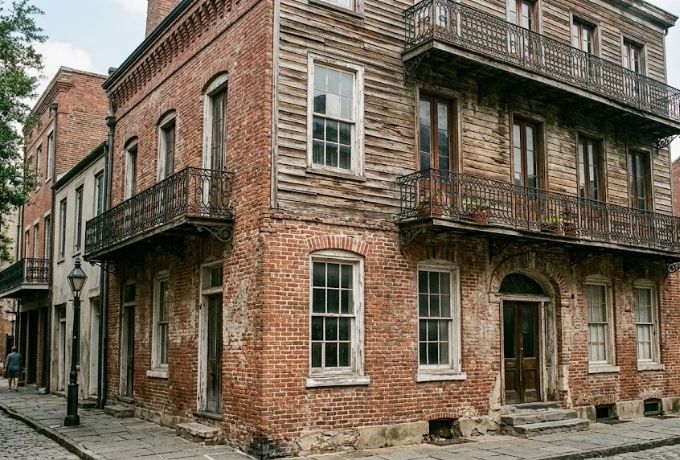
A 1920s craftsman in Irving Park or a 1910 Foursquare in Fisher Park deserves rodent exclusion that doesn't leave hardware-cloth patches on original soffits or expanding foam wedged into decorative gable vents. Heritage-aware rodent control uses materials and methods that solve the problem without altering the architectural character of the home. We do this work in Greensboro's historic neighborhoods every week — it takes longer and costs modestly more, and it's the right approach.
What makes exclusion on a 100-year-old Greensboro home different
Greensboro's heritage neighborhoods — Irving Park, Old Irving Park, Fisher Park, Latham Park, and Sunset Hills — contain some of the finest residential architecture in the Piedmont Triad. These homes have held their value precisely because owners have maintained their original character. A poorly executed rodent exclusion job that patches original wood gable vents with hardware cloth, drills into original fascia, or uses foam-in-a-can at original brick transitions is a permanent aesthetic detriment to a house worth protecting.
Heritage-aware exclusion thinks about three things the standard approach doesn't. First, what material will look least intrusive in this specific location — stainless-steel mesh doesn't oxidize the way galvanized does, copper mesh weathers to a patina that blends with aged wood, and custom-fitted vent frames can match original profiles. Second, what attachment method preserves the original surface — in most cases, fitted frames and custom flanging eliminate the need to drive fasteners into original wood. Third, what documentation will help future restoration work — written records of every sealed point let a future contractor work around our exclusion rather than through it.
| Entry point | Standard approach | Heritage-aware approach |
|---|---|---|
| Gable vents | Galvanized hardware cloth stapled over original vent | Custom stainless-mesh frame fitted to original vent opening, no fasteners in original wood |
| Soffit returns | Expanding foam or caulk forced into gap | Galvanized or stainless flashing custom-bent to close gap, color-matched where visible |
| Crawl-space vent screens | Hardware cloth screwed over existing screen frame | Replacement screen insert in original frame using 1/4" stainless mesh, frame preserved |
| Pipe penetrations | Spray foam (rodent-chewable, unattractive) | Copper mesh packed into gap, followed by period-compatible sealant — no foam at exterior |
| Sill-plate gaps | Hardware cloth stapled to sill | Fitted copper-mesh insert pressed into gap without fasteners into original sill lumber |
| Brick mortar gaps | Portland cement or expanding foam | Tuck-pointed with lime-based mortar matching original joint profile, copper mesh backing |
Heritage neighborhoods we regularly service
These neighborhoods combine the highest heritage value with the greatest rodent pressure — mature hardwood canopy, pre-war construction, and original soffit and vent systems that are simultaneously architecturally irreplaceable and structurally vulnerable.
Irving Park Historic District · Craftsman, Tudor, Colonial Revival · 1900s–1930s
Original estate lots · Pre-1920 construction · Complex rooflines
Fisher Park Historic District · Victorian, Craftsman, Foursquare · 1890s–1920s
1950s–60s ranch under dense oak · Heritage value + canopy pressure
1930s–50s Colonial and Craftsman · Crawl-space foundations
Aycock Historic District · 1890s–1940s bungalows · Crawl-space Norway rat pressure
College Hill Historic District · Victorian-era housing · Multi-species pressure
Westerwood Historic District · 1920s–40s craftsman · UNCG-adjacent rental pressure
Historic home in Greensboro with a rodent problem? Call (844) 635-0403
Free inspection — we walk the property, identify every entry point, and provide a written assessment of proposed materials before any work starts. Preserving the home is part of the job.
Call (844) 635-0403How we approach historic home rodent exclusion
Heritage-aware inspection
Walk the property with attention to original materials — original wood vents, original sill plates, original brick joints. Document every entry point with photography and note the original material at each point before proposing any seal.
Written materials assessment
Provide a written list of proposed materials and methods for every entry point — what we'll use, why, how it attaches, and what it looks like when done. You approve before we start.
Heritage-grade exclusion
Install custom-fitted stainless or copper mesh at visible exterior points. Avoid expanding foam in any location visible from outside. Match sealant color and profile to original material where possible. No drilling into original wood trim.
Sealed-point documentation
Provide a written log of every sealed point — location, material used, attachment method, and technician signature. Useful for future restoration work and for historic district records if applicable.
Historic home rodent control cost in Greensboro
Single-species heritage program
Roof rat or Norway rat program with heritage-appropriate exclusion materials and written documentation.
Full heritage program
Both species, full attic and crawl-space treatment, complete roofline and foundation exclusion with stainless and copper materials.
Exclusion-only assessment
Full entry-point inspection and written materials assessment — useful before planning restoration work or for CoA documentation purposes.
Heritage materials (stainless mesh, copper mesh, lime mortar, custom vent frames) cost more than galvanized hardware cloth and take more time to fit. Free inspection, written quote before work starts.
Historic home rodent control — FAQ
What makes rodent exclusion different for historic homes in Irving Park and Fisher Park?
Historic homes present two distinct challenges. First, entry-point complexity: early-1900s construction has more potential entry points than modern homes — irregular wood framing, original sill plates that have moved over decades, unique vent configurations, and architectural details that don't accept standard exclusion hardware without modification or damage. Second, the material constraint: standard galvanized hardware cloth visible on an original craftsman soffit is an aesthetic problem — we use stainless-steel mesh in visible locations because it oxidizes more slowly and blends better with original finishes. We also avoid drilling into original wood trim, brick, or architectural elements wherever a less invasive method is available.
Is a historic home in Greensboro more likely to have rodent problems?
Yes, significantly. A century of wood movement, multiple generations of plumbing and electrical upgrades, original construction tolerances that predate modern pest-exclusion standards, and mature hardwood canopy that grows closer to rooflines every decade all combine to make pre-1945 homes in Greensboro's heritage neighborhoods substantially more vulnerable than newer construction. Irving Park, Fisher Park, and Latham Park consistently produce the highest-volume roof-rat calls we handle.
Will exclusion work damage the historic character of my Greensboro home?
Not if it's done correctly. The goal is to be invisible — seal the structural gap without altering the visual character of the home. That means custom-fitted stainless screening at gable vents, pipe-collar flashing at plumbing penetrations, copper mesh at sill-plate gaps, and written documentation of every sealed point so future restoration work knows what was done and where.
Do you work with owners of homes in designated historic districts?
Yes. Rodent exclusion work on the exterior of a home in a locally designated historic district in Greensboro may require a Certificate of Appropriateness from the Greensboro Historic Preservation Commission before certain materials are installed. We're familiar with this process. We provide written documentation of proposed materials and methods before work starts — the kind of documentation that supports a CoA application.
How much does historic home rodent control cost in Greensboro?
Historic home programs typically run $1,400–$2,200 for a full roof-rat or combined program — modestly higher than standard programs because heritage-appropriate materials cost more and take more time to fit correctly. Free inspection with written assessment of entry points and proposed materials before any work starts.