Dead rodent removal in Greensboro, NC
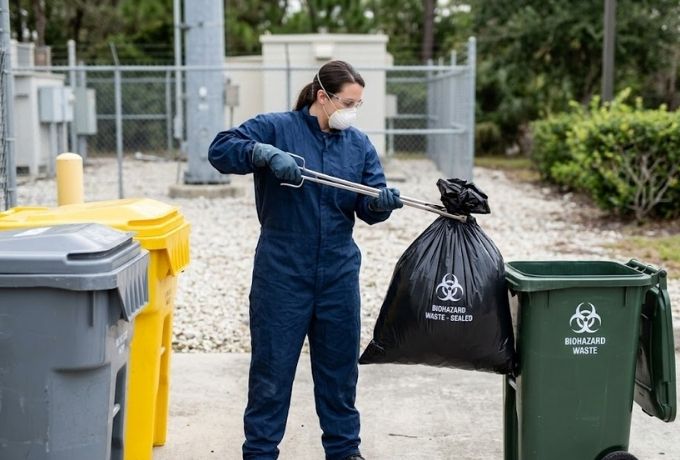
A dead rat or mouse in a wall cavity, attic, or crawl space produces an unmistakable decomposition odor that intensifies for 1–3 weeks before beginning to fade. The smell is difficult to localize from inside the living space, the carcass is often inaccessible without knowing exactly where to look, and standard odor-masking products don't address the source. Dead rodent removal is a localization-and-extraction service — we find the carcass using odor mapping, remove it through the least-invasive access point, and treat the cavity with enzymatic deodorizer.
The localization challenge in Greensboro homes
Our localization method: we move through the affected area systematically, identifying where the odor is strongest at wall surfaces, ceiling surfaces, and floor-level outlets and penetrations. We use moisture meter readings to detect decomposition-related moisture in wall cavities — a decomposing carcass increases local wall-cavity humidity in a detectable pattern. We probe accessible cavities with a thin probe through vent openings or outlet boxes before recommending any access-hole cutting. In most cases, we locate the carcass within 30 minutes of starting the localization process.
Access is always the least-invasive option that reaches the carcass: an existing outlet box or wall vent is the first choice, an accessible attic or crawl-space entry is the second, a small access hole in a low-visibility location (inside a closet, behind a door) is the last resort. We never cut a large opening speculatively. After extraction, the cavity is treated with enzymatic deodorizer, and we provide a written assessment of the entry point that placed the rodent in the wall — because a dead rodent in a wall means a live rodent got there through an unsealed entry.
Wall cavity — accessible via outlet or vent
Localize via odor mapping, extract through existing outlet box or vent opening, treat cavity with enzymatic deodorizer, replace cover. Most efficient extraction scenario.
Wall cavity — requires access hole
Localize precisely, cut minimal access hole in low-visibility location (closet wall, behind door), extract carcass, treat cavity, close access. We don't repair drywall — we close the access cleanly and recommend a drywall contractor for cosmetic repair if the location is visible.
Attic carcass
Most accessible dead-rodent scenario — enter attic, locate carcass visually or by odor concentration, extract in sealed bag, treat area with enzymatic deodorizer. Structural inspection for any decomposition-related damage.
Crawl-space carcass
Enter crawl space, locate by odor and visual inspection, extract in sealed bag, antimicrobial treatment of the extraction site and adjacent surfaces. Vapor barrier condition assessed if decomposition liquid has contacted the barrier.
Dead rodent smell in your Greensboro home? Call (844) 635-0403
We locate, extract, and deodorize — and identify the entry point so the next rodent doesn't end up in the same place. 24/7 response for strong odor situations.
Call (844) 635-0403Dead rodent removal cost in Greensboro
Attic / crawl-space extraction
Localization, extraction, and enzymatic treatment in accessible attic or crawl-space locations.
Wall cavity — accessible
Localization and extraction via existing outlet or vent opening. Enzymatic deodorizer treatment included.
Wall cavity — access hole required
Localization, minimal access opening, extraction, deodorizer treatment, and access closure. Drywall repair not included.
All dead rodent removal includes entry-point assessment and written recommendation. Emergency same-day response available for severe odor situations.
Dead rodent removal FAQ
How long does dead rodent smell last if I don't remove the carcass?
The odor from a dead rat typically peaks at 1–2 weeks as decomposition is most active, then gradually decreases over 3–6 weeks as the carcass desiccates. A dead mouse produces a shorter, less intense odor that typically clears in 1–3 weeks. The smell doesn't disappear — it diminishes to a lower background level that can persist for months in warm, enclosed cavities. Extraction eliminates the source rather than waiting for it to resolve.
Will the dead rodent smell go away on its own?
Eventually — but the timeline is 3–8 weeks for a rat and 1–4 weeks for a mouse, during which the odor is often strong enough to be disruptive in the living space. Enzymatic deodorizer applied after carcass extraction substantially accelerates odor resolution by breaking down the decomposition compounds rather than just masking them. We recommend extraction over waiting in almost every case.
How much does dead rodent removal cost in Greensboro?
Attic and crawl-space extraction runs $175–$350. Wall cavity extraction via existing access runs $250–$450. Wall cavity requiring access opening runs $350–$650. Emergency same-day response for severe odor situations available. Call (844) 635-0403.