Crawl-space rodent sealing in Greensboro, NC
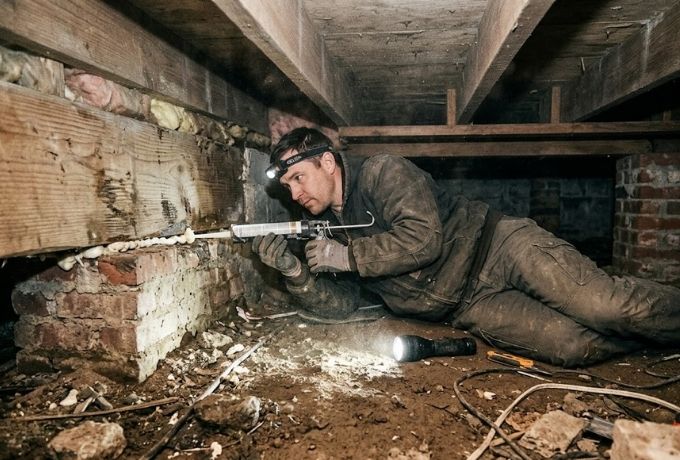
Greensboro's oldest and most Norway-rat-vulnerable housing sits on crawl-space foundations — and those foundations are now 60 to 100 years old. The vent screens that were adequate in 1940 are corroded, bent, or missing. The sill-plate gaps that were tight at construction have widened as wood has moved. The utility penetrations added during mid-century plumbing upgrades were never sealed with rodent-grade material. Crawl-space rodent sealing closes all of it — systematically, with materials that don't fail when the first Norway rat presses against them.
The neighborhoods most at risk
The following Greensboro neighborhoods have the highest concentration of crawl-space homes in the city and account for the majority of our Norway rat and house mouse crawl-space sealing calls:
The six crawl-space sealing points
- Foundation vent screensReplace corroded aluminum screen with 19-gauge, 1/4" galvanized or stainless hardware cloth in a secure frame — not stapled mesh, not replacement inserts over old screen. The frame attachment is load-bearing against rodent pressure.
- Sill-plate gapsThe joint between wood framing and concrete foundation. Movement over decades creates gaps at corners, at splice points, and where additions were attached. Sealed with copper mesh backed by foam backer rod and exterior sealant.
- Pipe penetrationsEvery drain pipe, water supply line, gas line, and electrical conduit that passes through the foundation wall or floor system. Copper mesh at each penetration, sealant where structural substrate allows.
- Crawl-space access doorThe access hatch or door at the exterior foundation perimeter. Often the largest single gap in the crawl space. Heavy-gauge brush sweep or rubber gasket at the door threshold; hardware cloth frame at any ventilated door panels.
- Foundation-block mortar gapsHairline mortar gaps in concrete-block foundations that have widened over decades — particularly at corners and at the top course where the sill plate sits. Patched with mortar-compatible material and copper mesh backing.
- Post and beam penetrationsWhere structural posts or piers pass through the crawl-space floor — a gap point in some older Greensboro construction where a gap exists between the post and the surrounding block or concrete pad.
Why Greensboro crawl-space moisture and rodent pressure are linked
Norway rats need regular water access. A crawl space with high humidity, condensation on pipes, standing water from poor drainage, or a failing vapor barrier provides both harborage and hydration simultaneously — which is why high-moisture crawl spaces sustain substantially larger Norway rat populations than dry ones, even when both have the same entry-point profile.
During every crawl-space inspection, we assess moisture conditions — visible standing water, pipe condensation, vapor barrier condition, and ventilation adequacy — and include findings in the written report. We don't perform vapor barrier installation or drainage correction ourselves, but we document what we see and provide written recommendations. Correcting moisture alongside exclusion sealing produces significantly better long-term outcomes than sealing alone in a wet crawl space.
Crawl-space rodent problem in Greensboro? Call (844) 635-0403
Free crawl-space inspection — we walk the full perimeter from inside, document every entry point, and provide a written sealing quote. Guilford County's crawl-space neighborhoods are our most frequent work.
Call (844) 635-0403How crawl-space rodent sealing works
Crawl-space walkthrough
Enter the crawl space and walk the full perimeter from inside — the only way to see sill-plate gaps and interior pipe penetrations accurately. Document every entry point, assess moisture conditions, photograph all findings.
Population clearance
If active Norway rats or mice are in the crawl space, snap traps are deployed and confirmed clear before sealing begins. Sealing with active rodents inside produces decomposing carcasses in the structure.
Foundation-perimeter sealing
Replace vent screens with hardware-cloth frames, seal sill-plate gaps with copper mesh and sealant, close pipe penetrations with copper mesh, patch mortar gaps, and install door-sweep hardware at the access hatch. Written seal-point log provided.
Follow-up & moisture report
Return 14–21 days after sealing to verify no new entry. Written moisture-condition report provided at completion — notes on vapor barrier condition, condensation points, and drainage recommendations for a crawl-space contractor if needed.
Crawl-space rodent sealing cost in Greensboro
Standard crawl-space seal
Foundation-perimeter sealing for a standard Greensboro crawl-space home — vent screens, sill-plate gaps, pipe penetrations, and access door.
Large / complex crawl space
Large crawl-space footprint, many vent penetrations, or significant sill-plate work. Includes full perimeter seal-point documentation.
Treatment + sealing combined
Norway rat treatment program combined with full crawl-space exclusion sealing. Most complete solution for crawl-space infestations.
All programs include written moisture-condition report and seal-point documentation. Free crawl-space inspection, written quote before work starts.
Crawl-space rodent sealing — FAQ
Why does Greensboro have so many crawl-space rodent problems?
Greensboro's housing stock is heavily weighted toward pre-WWII and postwar construction with crawl-space foundations. Homes built in the 1920s through 1960s have foundation vent screens that are now 60–100 years old. Aluminum screen corrodes; metal frames rust and separate from foundation block; wood-frame vent surrounds deteriorate. Every deteriorated vent screen is a potential Norway rat or house mouse entry. Greensboro's combination of aging crawl-space housing and year-round rodent pressure makes crawl-space sealing one of our most in-demand services.
What gauge hardware cloth do I need for crawl-space vent screens?
Minimum 19-gauge, 1/4-inch-mesh galvanized or stainless-steel hardware cloth. Standard aluminum window screen is rodent-permeable — rats and mice chew through it within days. Galvanized hardware cloth is appropriate for protected vent locations; stainless is preferred for high-moisture crawl-space environments. The frame and attachment are as important as the mesh — a panel secured only with staples will pull away in 1–2 seasons.
How does crawl-space moisture affect rodent pressure?
Norway rats need regular water access and prefer high-humidity environments. A crawl space with moisture problems sustains a larger resident population than a dry one. Correcting moisture issues — vapor barrier installation, improved drainage, crawl-space ventilation — reduces harborage attractiveness alongside exclusion sealing. We note moisture conditions during every crawl-space inspection and include recommendations in our written assessment.
Is crawl-space sealing different from full home exclusion?
Crawl-space sealing is the foundation-perimeter zone of a full home exclusion program. A full exclusion program also addresses interior pipe penetrations at kitchen and bathroom level, door sweeps, and in canopy-adjacent homes, the roofline zone. For homes with active Norway rat infestations specifically localized to the crawl space, crawl-space sealing may be the appropriate scope. For multi-zone pressure, full envelope exclusion is the complete answer.
How much does crawl-space rodent sealing cost in Greensboro?
Crawl-space rodent sealing for a standard Greensboro home runs $350–$900. Large crawl spaces with many vent penetrations and significant sill-plate work fall in the $700–$1,400 range. Heritage homes with original vent frames that need custom-fitted replacement mesh run modestly higher. Free inspection and written entry-point count before quoting.