Mouse-proofing & entry-point sealing in Greensboro, NC
A house mouse can pass through a gap the size of a pencil — 6mm, roughly 1/4 inch. That's dramatically smaller than most homeowners expect, and it's why casual DIY sealing so often fails: the obvious gaps get plugged while the pencil-diameter gaps under the sink and at the sill plate stay open. Mouse-proofing finds every viable entry point at the 6mm threshold, seals each with the right material, and combines the physical seal with scent-trail treatment at confirmed travel routes for recurring-infestation properties.
Where mice actually enter Greensboro homes
The kitchen inspection checklist — the most commonly missed mouse entries
- →Under-sink drain pipe gap: Where the P-trap drain exits through the cabinet back panel or floor. Almost always present in Greensboro homes, 1/2 to 1 inch in diameter, directly adjacent to kitchen food storage.
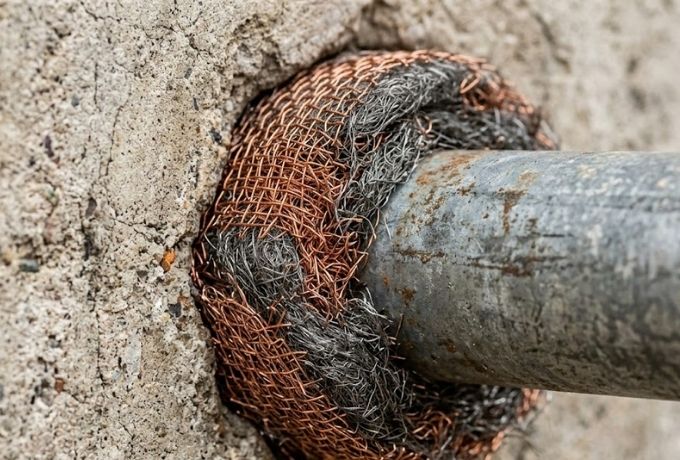
- →Gas supply line gap: Where the gas line enters the wall behind the range — typically foam-sealed originally, but foam degrades and is mouse-permeable. Requires copper mesh replacement.
- →Cabinet toe-kick gaps: The gap between the cabinet base and the floor — particularly at corners where the toe-kick panel meets the adjacent wall. Mice use this concealed space as a primary travel corridor.
- →Refrigerator water-line penetration: Where the ice-maker supply line exits through the wall behind the refrigerator. Gap is often 3/4 inch, in a rarely-inspected location.
- →Dishwasher utility penetrations: Water supply, drain, and electrical conduit behind the dishwasher — multiple penetrations often at floor level, each a potential mouse entry.
- →HVAC floor register gaps: Where floor-mounted HVAC registers sit over sub-floor duct penetrations — gaps around the register perimeter give mice wall-cavity access from below.
How we mouse-proof a Greensboro home
6mm audit — interior first
Walk every kitchen cabinet interior, under-sink area, utility room, and utility chase. Probe every pipe penetration. Then walk the exterior perimeter for foundation-level entries. Every gap at or above 6mm documented.
Scent-trail treatment
For recurring-infestation properties, apply enzymatic scent-trail treatment at confirmed travel routes before sealing. Neutralizing the pheromone markers reduces aggressive probing of new seals by subsequent mouse populations.
Mouse-grade sealing
Copper mesh at all pipe penetrations — packed tightly, not pushed loosely. 1/4" hardware cloth at crawl-space vents. Heavy-gauge brush sweeps at door thresholds. Sealant at sill-plate gaps with foam backer rod. No 1/2" mesh, no expanding foam as primary seal.
Follow-up clearance
Return 10–14 days after sealing to confirm no new entries and no new droppings. Check all sealed points for gnaw marks indicating probing. Written clearance report provided.
Recurring mice in your Greensboro home? Mouse-proofing is the fix. Call (844) 635-0403
Free inspection — we audit to the 6mm standard, seal every entry, and treat scent trails for recurring-infestation properties. Written quote before work starts.
Call (844) 635-0403Mouse-proofing cost in Greensboro
Mouse-proofing only
Full 6mm audit and sealing for a standard Greensboro home. Includes scent-trail treatment for recurring-infestation properties.
Treatment + proofing
Combined mouse treatment and full proofing program. Most common approach for first-time or moderate infestations.
Crawl-space included
Full kitchen-and-interior proofing plus crawl-space vent screen replacement and foundation-level sealing.
All mouse-proofing includes follow-up clearance inspection. Free inspection, written quote before work starts.
Mouse-proofing in Greensboro — FAQ
What gap size keeps mice out?
House mice can pass through a gap of approximately 6mm (1/4 inch) — roughly the diameter of a pencil. This is significantly smaller than the rat threshold (20mm), which is why mouse-proofing requires more thorough sealing. Standard hardware cloth with 1/4-inch mesh is mouse-grade; 1/2-inch mesh is not — mice can compress through half-inch openings.
What's the most commonly missed mouse entry point in Greensboro homes?
The gap around the drain pipe under the kitchen sink — where the P-trap drain exits through the cabinet back panel or floor. This gap is almost always present, often 1/2 to 1 inch, located directly adjacent to kitchen food storage. The second most-missed point is the gap where the gas supply line enters the wall behind the range — usually foam-sealed originally, but foam degrades and mice chew through it.
How is mouse-proofing different from rat-proofing?
Two differences. First, the gap threshold: mouse-proofing requires sealing gaps down to 6mm rather than 20mm for rats, so more entry points qualify. Second, target locations: mice primarily exploit interior pipe penetrations, door sweeps, and wall-cavity entry points at kitchen and bathroom level. Rat-proofing focuses on the building envelope at ground and roof level. Mouse-proofing goes deeper into the kitchen and utility-room anatomy.
Does mouse-proofing require treating the scent trail too?
For recurring mouse problems, yes. Mouse-proofing seals the entry but doesn't erase the pheromone trail that guided mice there. If the scent trail remains active at a newly sealed entry point, mice will probe the seal aggressively. For repeat-infestation properties, we combine physical sealing with enzymatic scent-trail treatment at confirmed travel routes.
How much does mouse-proofing cost in Greensboro?
Mouse-proofing for a standard Greensboro home runs $275–$700. Combined treatment and mouse-proofing programs run $450–$1,000. Homes with crawl-space access needing full foundation sealing fall in the $600–$1,100 range. Free inspection with written entry-point count and proofing quote.