Mouse infestation treatment in Greensboro, NC
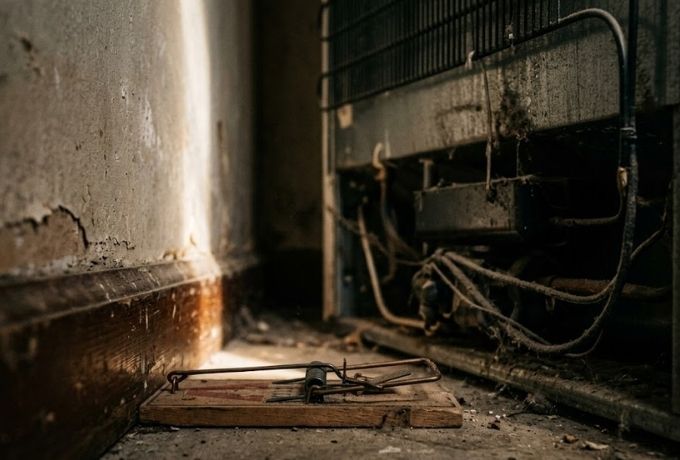
A mouse infestation is different from finding one mouse. When populations are established — multiple nesting sites, wall-cavity colonies, daily fresh droppings across several rooms — trapping alone produces temporary results. Mouse infestation treatment targets the population, the scent trails that sustain it, and every entry point that allows re-establishment. That's a multi-visit program, not a one-time trap-and-go.
Three infestation stages — treatment scope differs at each
1–4 mice, single entry point
- Droppings concentrated in one area
- No wall-cavity scratching sounds
- No strong ammonia odor
- Single gnaw point at one entry
Treatment: 2 visits — trap network + sealing. Typically resolved in 2–3 weeks.
5–20 mice, multiple entry points
- Droppings in kitchen, pantry, and garage
- Scratching sounds in at least one wall
- Mild-to-moderate ammonia odor near nesting areas
- Gnaw damage on multiple food packages
Treatment: 3 visits — full trap network, scent-trail treatment, multi-point exclusion sealing.
20+ mice, wall-cavity colonies
- Droppings throughout the home
- Scratching from multiple walls and ceiling
- Strong persistent ammonia odor
- Visible nest material in drawers, appliances
Treatment: 3–4 visits — intensive trap density, possible attic/crawl-space access, full sealing + cleanup.
How a standard mouse infestation program runs
Inspection, severity assessment, trap network
Full property walk. Identify all active areas, map entry points, assess severity level. Deploy snap-trap network at confirmed travel routes — behind appliances, inside lower cabinets, in crawl-space access areas. Identify all entry points and provide written quote for sealing scope.
Trap check, population assessment, scent-trail treatment
Check all traps, clear catches, reset. Assess whether trap strike rate indicates population is declining or holding. For established infestations, apply enzymatic scent-trail treatment at confirmed runway areas — this disrupts the pheromone markers that sustain the colony and guide new mice to existing entry points.
Final trap check, entry-point sealing, minor cleanup
Confirm population has cleared — no new trap strikes, no fresh droppings. Seal all identified entry points with rodent-grade materials: copper mesh at pipe penetrations, hardware cloth at vent openings, expandable foam-with-mesh at sill-plate gaps. Dispose of nesting material in sealed areas accessed during treatment.
Clearance inspection
For severe infestations, a final confirmation visit ensures no new activity has emerged from any unsealed secondary entry point. We don't charge for this visit if we're not confident the job is fully resolved after the Day 21 visit.
The scent trail problem — what keeps bringing mice back
The most overlooked factor in recurring mouse infestations is the pheromone trail. House mice communicate through urine — they deposit scent markers along their travel routes that signal to other mice: safe path, food nearby, established territory. These trails persist long after the mice themselves are gone. They survive cleaning, they survive winter, and they guide the next fall's mice directly to the same entry points the previous population used.
In Greensboro's older housing stock — particularly 1940s–60s construction in Westerwood, College Hill, Aycock, and Kirkwood — the same crawl-space vent or sill-plate gap has been admitting mice every October for years, because the scent trail leading to it has never been treated. The homeowner traps a few mice each fall, declares victory, and repeats the cycle next year.
Breaking that cycle requires three things together: eliminating the current population, sealing the entry points with rodent-grade materials (not foam alone, which mice chew through in weeks), and treating the scent trails with an enzymatic product that degrades the pheromone markers. Skip any one of those three and the recurrence rate stays high.
Established mouse infestation in Greensboro? Call (844) 635-0403
Free inspection — we assess severity honestly, tell you what the program involves, and give you a written quote before any work starts.
Call (844) 635-0403Mouse infestation treatment cost in Greensboro
Early-stage program
2-visit program for contained infestations — trap network, sealing at identified entry points, follow-up confirmation.
Established infestation
3-visit program with scent-trail treatment, multi-point exclusion sealing, and population confirmation visit.
Severe / attic-involved
Full program for severe infestations with attic or crawl-space colonies. Includes exclusion sealing at all levels.
Droppings cleanup and nesting-material disposal quoted separately if needed. Free inspection, written quote before work starts. All programs include follow-up visits until clearance is confirmed.
Mouse infestation treatment — FAQ
How do I know if I have a mouse infestation versus just one or two mice?
One or two mice spotted occasionally suggests a recent entry — the population is small and the entry point is probably single. Signs of a true infestation include droppings in multiple rooms or at multiple levels simultaneously, scratching sounds in walls or ceilings from more than one location, strong ammonia-like odor from accumulated urine, gnaw damage on food packaging in multiple locations, and visible grease trails on baseboards near multiple entry points. If you're finding droppings daily rather than occasionally, the population has been established for a while.
Why did my mouse problem come back after I set traps last year?
Recurrence after trapping almost always means two things: the entry point was never sealed, and the scent trail was never neutralized. House mice leave pheromone-laden urine along their travel routes. Those trails persist through the summer and guide the next fall's mice directly to the same entry points. Solving a recurrent mouse infestation requires identifying every entry point, sealing with rodent-grade materials, and treating scent trails to break the re-infestation cycle.
Can mice infest an attic the same way rats do?
Yes, though less commonly than roof rats. House mice can establish nesting colonies in attic insulation — they're excellent climbers and can access attics through the same gap types as roof rats. Attic mouse infestations are identifiable by small-gauge droppings throughout the insulation layer and nesting cavities in batts or blown-in insulation. The treatment approach is similar to roof-rat attic exclusion but uses mouse-gauge sealing materials.
How many visits does mouse infestation treatment take?
A contained infestation with one or two entry points can often be resolved in two visits: initial treatment with trap placement, then a follow-up 10–14 days later to confirm clearance and complete the final sealing. An established infestation with wall-cavity nesting, multiple entry points, and possible attic involvement typically takes three visits over 3–4 weeks. We don't close the job until the follow-up confirms no new activity.
How much does mouse infestation treatment cost in Greensboro?
A standard 2-visit mouse infestation program runs $350–$750 for most Greensboro homes. Extended programs for severe infestations with wall-cavity nesting and multi-point exclusion sealing range from $700–$1,300. Attic mouse infestations requiring insulation inspection and attic exclusion sealing fall in the $900–$1,800 range. Free inspection, written quote before work starts.