The gap threshold — what size gap lets a Norway rat through
Norway rats can compress their bodies through a gap approximately 3/4 inch (20mm) in diameter — roughly the size of a quarter. This is smaller than most homeowners expect. A gap that looks "too small for a rat" often isn't. The way to think about crawl-space exclusion is not "is this gap large?" but "is this gap larger than 3/4 inch?" — because if it is, it's a potential Norway rat entry.
House mice have a lower threshold still: approximately 6mm (1/4 inch) — the diameter of a pencil. Any crawl-space gap that passes a pencil passes a mouse. This is why the exclusion material standard for crawl-space vents is 1/4-inch mesh: it's below the mouse threshold, which automatically handles both rats and mice.
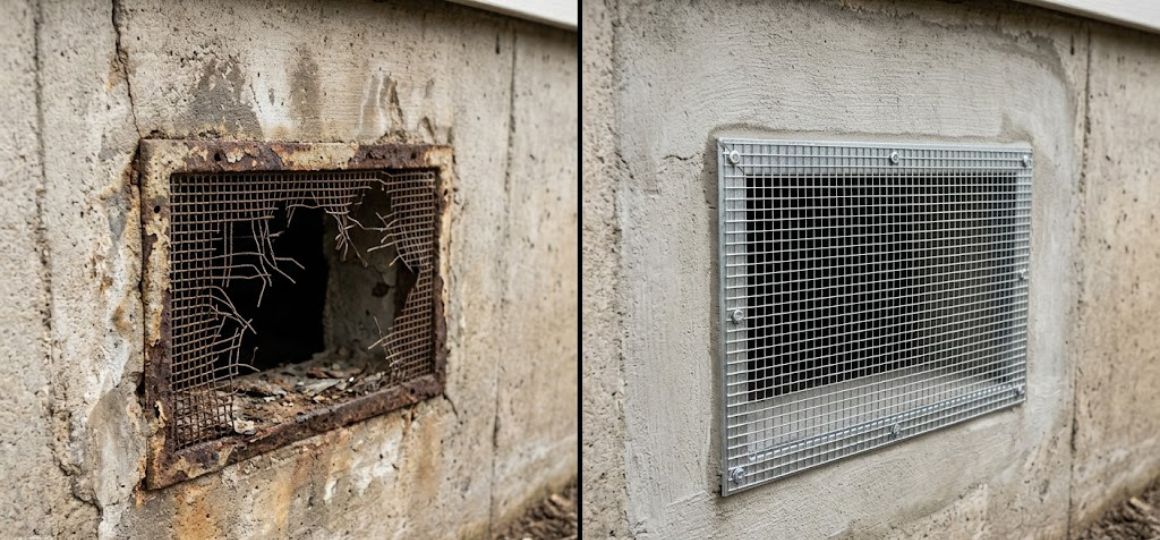
Foundation block vents in Greensboro's older homes are typically 8×16-inch openings covered by screen. When that screen fails — corrodes, pulls away from the frame, gets pushed in — you have an 8×16-inch opening with nothing blocking entry. The relevant question isn't gap size at that point; it's whether the screen is intact. If it isn't, it needs to be replaced regardless of what the remaining screen looks like.
What doesn't work — the materials that fail within a season
Expanding foam alone — the most common DIY choice and the most common failure. Rodents chew through standard polyurethane expanding foam within days to weeks. The foam compresses when bitten and provides no resistance. Even "pest-stop" formulations of foam that contain capsaicin or other deterrents are chewed through once the deterrent dissipates. Foam has one legitimate use in crawl-space exclusion: as a backing material packed behind rodent-grade mesh, not as the primary seal.
Standard aluminum window screen — the original material in most Greensboro crawl-space vents, and the material that fails. Standard aluminum insect screen has mesh openings larger than 1/4 inch and can be chewed through by rats and mice. It also corrodes rapidly in Greensboro's humid conditions. If your crawl-space vents have aluminum window screen, they need to be replaced.
Hardware cloth with staple attachment only — even correctly-sized 1/4-inch hardware cloth will fail if it's secured only with staples driven into aging wood. Staples pull out of soft, weathered sill lumber within 1–2 seasons. The hardware cloth panel then separates from the frame and the gap reopens.
What does work — material specs for each crawl-space entry type
Foundation vent screens: 19-gauge welded wire mesh, 1/4-inch opening, galvanized or stainless steel (stainless preferred in high-moisture crawl spaces where galvanized corrodes faster). The mesh must be in a frame that's secured to the surrounding structural framing — not just to the existing vent cover — with galvanized screws or bolts at 6-inch intervals. The frame provides the load-bearing resistance against rodent pressure; the mesh provides the exclusion.
Pipe penetrations through foundation walls: Copper mesh (not steel wool, which corrodes and compresses) packed tightly into the gap around the pipe. Copper mesh maintains its shape, doesn't corrode, and rats don't chew through it effectively. After packing the copper mesh, apply a rodent-appropriate sealant over it — caulk rated for exterior masonry use. The sealant isn't what stops the rat; the copper mesh is. The sealant fills the residual gap and protects the mesh from debris accumulation.
Sill-plate gaps: The junction between the wood sill plate and the concrete or block foundation. These gaps widen over time as wood moves — they may be hairline in some places and 1/2 inch in others on the same home. Copper mesh packed into accessible gaps, followed by foam backer rod and exterior-grade sealant. For larger gaps, rigid material backing (galvanized flashing) before the mesh and sealant.
Crawl-space access door: Heavy-gauge aluminum brush sweep at the door threshold — not the hollow rubber bulb sweeps that compress under light pressure. Hardware-cloth frame at any ventilated panel in the access door itself.
The sequencing rule — why you seal last, not first
The most consequential error in DIY crawl-space exclusion is sealing before the existing population is cleared. If Norway rats are currently in the crawl space when you seal the entry points, you've sealed them in. Sealed rodents that can't exit die in the crawl space, decompose, and produce weeks of odor that migrates into the living space above. The resulting cleanup is more expensive and more disruptive than addressing the population before sealing.
The correct sequence: confirm whether there's an active population first. Signs of active crawl-space infestation include fresh droppings (dark and moist, not gray and crumbling), musky odor from the access hatch, and scratching sounds below floor level. If those signs are present, trap the population before sealing — snap traps in the crawl space at confirmed travel paths, pre-baited for 3–5 days before activation to overcome Norway rat neophobia. Once trap activity has stopped for 5 or more days, the population is likely cleared and sealing can proceed.
When professional exclusion is worth the cost versus DIY
Foundation vent screen replacement with hardware cloth is a straightforward DIY task for an accessible, exterior-mounted vent with a simple frame. Pipe penetrations at accessible exterior walls are manageable with copper mesh and appropriate sealant. These are the two DIY-accessible interventions that cover the most common entry points.
The entry points that benefit from professional assessment are the ones that require knowing where to look: sill-plate gaps at interior corners of the crawl space that are only visible from inside, secondary pipe penetrations at utility chases that don't show on the exterior, and the subtle separations at the wood-frame junction where post-war additions meet the original foundation. These gaps are the ones that keep producing recurring infestations after a homeowner has addressed the obvious vents and thinks the job is done.
For Greensboro homes in the high-pressure crawl-space corridors — Aycock, Westerwood, College Hill, Kirkwood, Latham Park — a professional exclusion audit is the investment that converts a recurring annual infestation into a solved problem. Call (844) 635-0403 for a free crawl-space assessment.
Rodent problem in Greensboro or Guilford County?
Free inspection, same-day dispatch available, written quote before any work starts. Licensed in North Carolina. Open 24/7.
Call (844) 635-0403