How the furniture market cycle creates rodent pressure spikes
High Point's furniture market operates on a twice-annual cycle — spring market in April and fall market in October — that creates a distinct rodent pressure pattern unlike standard commercial facilities. Between market periods, showrooms and storage facilities sit largely dormant: low foot traffic, minimal receiving activity, and extended periods of undisturbed interior space. Norway rats establish harborage in pallet storage during these quiet periods, undisturbed by the human activity that would normally deter them from interior spaces.
When market opening approaches, receiving activity intensifies and loading dock doors open for extended periods during setup weeks. This happens to coincide with two of the highest-pressure periods in the Piedmont Triad rodent calendar: spring market in April follows the peak of Norway rat spring breeding, and fall market in October falls directly in the September–December peak pressure window for both Norway rats and roof rats. The market calendar and the rodent calendar overlap in the worst possible way.
The result: furniture market facilities that don't have active pre-market rodent programs discover infestations during setup week, when addressing them is maximally disruptive. A pallet of upholstered goods with rodent damage discovered on market opening day is a problem with no good solution at that point. The time to address it was 3–4 weeks before market opens.
Why loading docks are the primary risk point in High Point warehouses
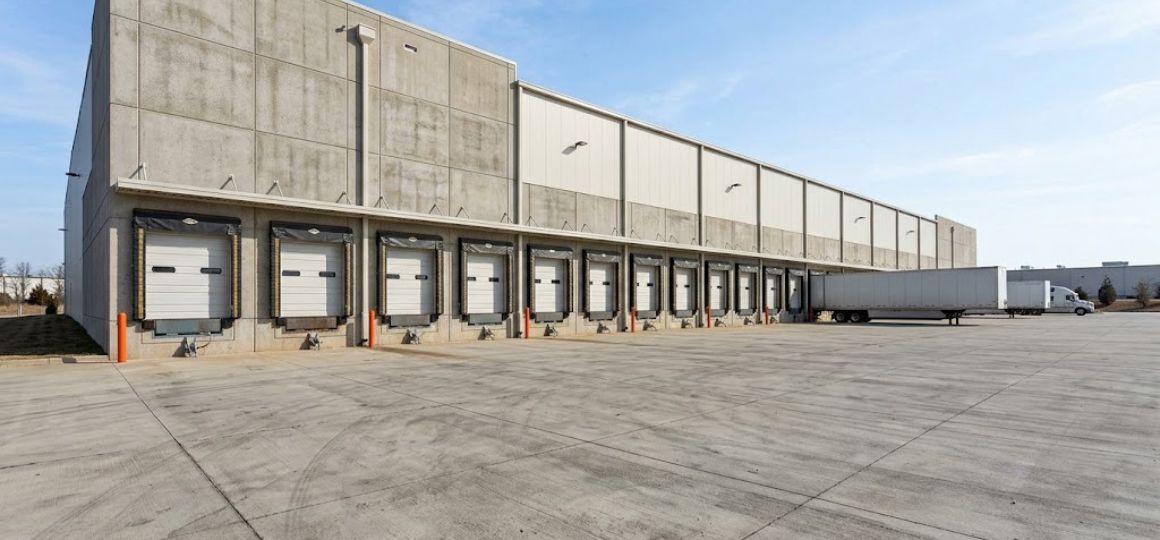
Loading docks in High Point furniture warehouses face the same dynamics as warehouse loading docks anywhere — dock-plate gaps, aging door brush seals, dock-side dumpster adjacency — but with the additional factor that dock doors stay open for extended periods during market setup receiving. Extended open dock doors in October, which is peak Norway rat pressure season, is essentially an open invitation.
Norway rats that have been colonizing the dock-side perimeter during the between-market dormancy period find the opening and establish interior territory quickly during the receiving intensity of setup week. By the time the market opens, the interior population is established and visible — to buyers, to press, and potentially to third-party food-safety auditors if the facility handles anything with food-safety requirements.
The dock assessment we conduct for High Point warehouse accounts covers: dock-door brush seal condition (minimum 3/4-inch gap free at the threshold), dock leveler plate clearance (Norway rats enter under dock plates when the plate-to-floor gap exceeds 3/4 inch), dock-side dumpster distance and configuration, and exterior bait-station coverage at all dock entries. The dock is where the program needs to be densest, because the dock is where the exposure is highest.
Documentation for furniture market facilities — what third-party audits require
Furniture market facilities that also handle any food product, or that are evaluated by third-party auditors for retailer certification programs, face documentation requirements beyond standard commercial pest control. Audit programs like SQF, BRC, and AIB require at minimum: a current service contract with a licensed pest control operator, service logs documenting each visit with station-by-station activity records, a site map showing bait-station placement and numbering, product data sheets for all rodenticides in use, and evidence that pest control records are reviewed by management regularly.
We format all High Point warehouse service documentation to meet audit program requirements. The site map is provided at setup and updated when station placement changes. Service logs are provided after each visit with station numbering keyed to the site map. Product SDS documents are provided at setup and updated when formulations change. Quarterly trend reports — bait consumption by station over time — are provided for accounts that request them for management review purposes.
The pre-market service visit — what it covers and why the timing matters
For High Point market-district accounts, we schedule a pre-market service visit 3–4 weeks before each market opening — typically mid-March for spring market and mid-September for fall market. This timing accomplishes three things: it catches any population that established during the between-market dormancy period before it reaches market-opening density, it refreshes bait in all exterior stations to maximum coverage before the peak pressure of setup week, and it produces fresh service documentation that confirms active pest management was in place before market opening.
The pre-market visit covers: full interior sweep for droppings evidence, nest sites, or visible rodent activity in pallet storage and receiving areas; dock assessment for any new gap conditions that developed since the prior visit; bait station inspection and replenishment across all exterior perimeter stations; interior mechanical snap-trap check and reset; and documentation update. The visit is structured to be completed before normal market-setup activity begins — we schedule it to avoid disrupting the receiving teams.
Call (844) 635-0403 to establish a High Point furniture market account with pre-market service visits on both the spring and fall calendar. We know the market district and we'll build a program around the market cycle, not a generic commercial template.
Rodent problem in Greensboro or Guilford County?
Free inspection, same-day dispatch available, written quote before any work starts. Licensed in North Carolina. Open 24/7.
Call (844) 635-0403